
 Deutsch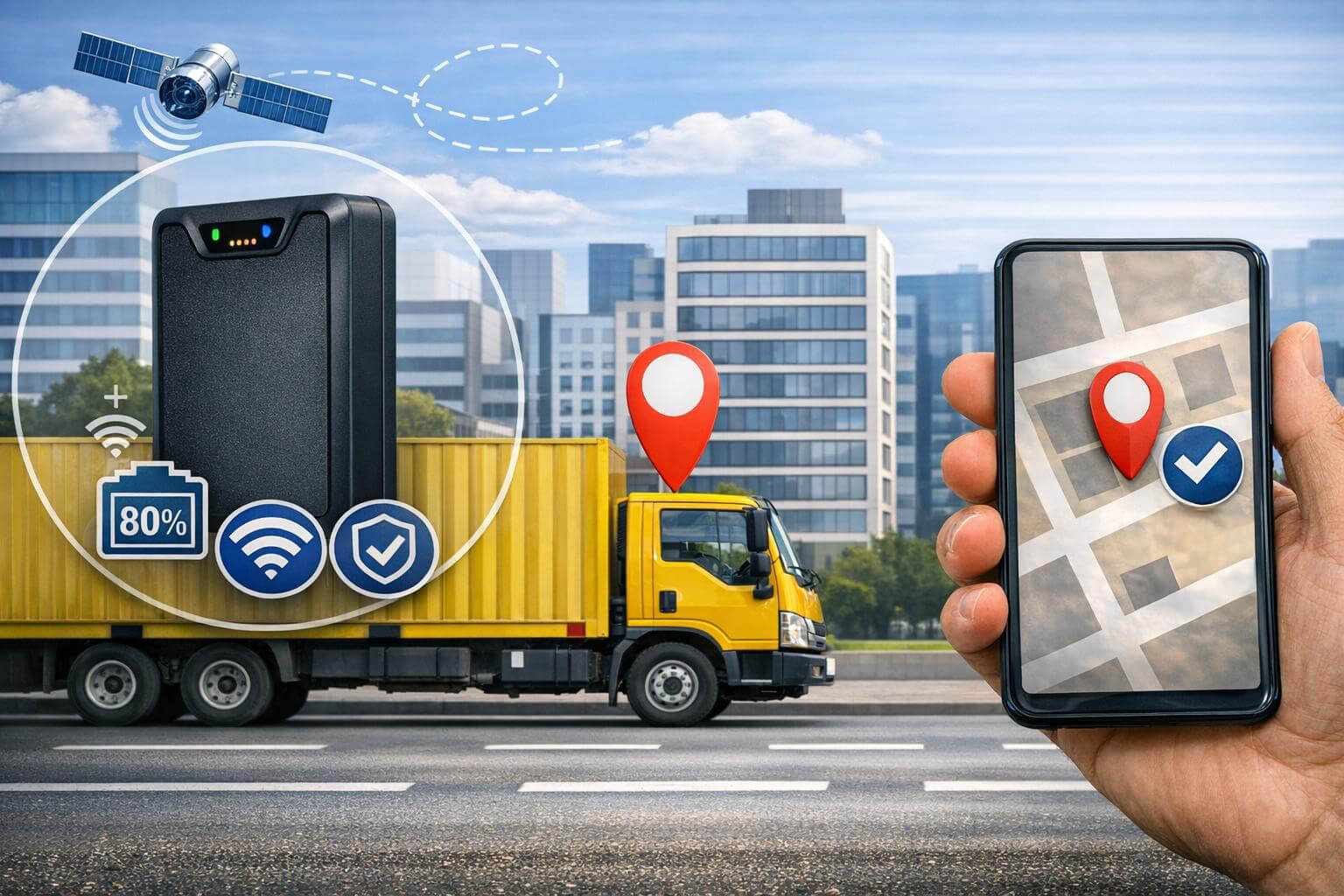
Tracking devices used for monitoring goods — commonly referred to as asset‑tracking devices — are often small, difficult to access, and expected to operate reliably for many years. Whether mounted on construction equipment, installed in harsh desert environments, or exposed to salty ocean air on a cargo vessel, they must perform flawlessly.
At the heart of every tracking device is the battery: only a stable, long‑lasting power supply ensures that captured location and status data can be reliably transmitted to the respective platform, cloud application, or control center.
Different Battery Technologies — Depending on the Application
Asset tracking requires flexibility. That’s why different battery chemistries are used depending on the project:
• Lithium-Ion (Li‑Ion) Batteries
Ideal for applications requiring regular data transmission or higher pulse currents — offering high energy density combined with excellent cycle stability.
• Lithium Thionyl Chloride (Li‑SOCl₂) Batteries
Perfect for ultra‑long‑life applications. These primary cells offer extremely low self‑discharge and very high energy density, enabling them to operate reliably for many years. They provide consistent, small current pulses for short transmission intervals and return immediately to sleep mode — the key to their exceptional service life.
• Nickel-Metal Hydride (NiMH) Batteries
Robust, safe, temperature‑stable, and ideal when moderate energy density is sufficient and a particularly durable, well‑controlled system is required.
Primary or Secondary Cell? Jauch Provides Both.
- Primary cells (non‑rechargeable)
Ideal for long‑term trackers designed to operate for multiple years without maintenance. - Secondary cells (rechargeable)
The right choice when frequent data transmission, high pulse currents, or energy‑intensive sensor technology is involved.
Customized Battery Packs — When Standard Cells Aren’t Enough
Many tracking applications require custom‑engineered energy‑storage solutions — from special form factors and integrated protection circuits to rugged housings designed to withstand extreme temperatures, shock, and vibration.
Jauch develops these customer‑specific battery packs, including electronics, testing, and certification. Since asset trackers, such as container or vehicle trackers, are deployed globally, international battery certifications like UL, IEC, BIS, or KC are often required.
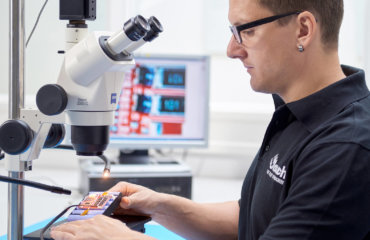
With Jauch’s in‑house test and certification center, the entire process can be supported efficiently, with all necessary testing performed directly on site.