
 Deutsch
Whether GNSS positioning, LPWAN tracking, UWB ranging, or 5G synchronization—everything starts with timing. Even a 1‑ns timing error results in approximately 30 cm of positioning error. A stable, low‑noise clock shortens time‑to‑fix, improves measurement quality, and reduces power consumption. Quartz crystals and oscillators therefore provide the precise foundation of every asset‑tracking system, especially for long‑term applications in demanding environments.
Why Timing Determines Positioning Accuracy
GNSS receivers calculate distances using signal propagation times and carrier phases. Three characteristics of the timing source are crucial:
• Frequency stability over temperature, aging, and voltage
The lower the drift, the more stable the tracking loops remain—especially under weak signals or multipath conditions.
• Phase noise and jitter
Low noise improves code and carrier tracking, enables tighter PLL/FLL loop bandwidths, and minimizes cycle slips.
• Short‑term stability (Allan deviation)
Relevant for TDoA/OTDOA (4G/5G), UWB ranging, and time‑synchronization networks; low Allan deviation means less timing jitter within the measurement window.
The result: better timing = faster fixes, more robust centimeter‑level solutions, reduced drift during holdover, and overall higher system availability
Which Frequency Components Are Suitable?
1) Quartz Crystals (XTAL)
Passive resonators that clock microcontrollers, transceivers, or PLLs. Compact, power‑efficient, and cost‑effective, typically offering ±10–50 ppm stability.
Key parameters: ESR, load capacity, drive level, and g‑sensitivity.
WA Quartz Crystals (Wireless Applications)
The JXS‑WA families are optimized specifically for wireless designs:
- very low ESR
- robust SMD packages
- high stability under shock, vibration, and temperature
- ideal for RF transceivers, GNSS receivers, and compact tracking modules.
2) XO / VCXO (Voltage‑Controlled Oscillators)
Active units with an integrated quartz crystal.
- Stability better than discrete quartz circuits, typically ±10…±25 ppm (XO); fine tuning available with VCXO versions.
- Advantages: defined specifications, and low jitter depending on the series.
3) Low‑Power Oscillators
Critical for battery‑powered trackers:
- extremely low current consumption
- fast start‑up
- stable operation at low supply voltages
They reduce time‑to‑fix and extend battery lifetime—essential for trackers designed to operate for years without maintenance.
4) TCXO (Temperature‑Compensated Oscillators)
Electronically temperature‑compensated to achieve ±0.1–2 ppm stability across the full operating range. Ideal for:
- GNSS tracking
- LoRaWAN, NB‑IoT
- mobile high‑precision applications
TCXOs for GPS/GNSS Applications
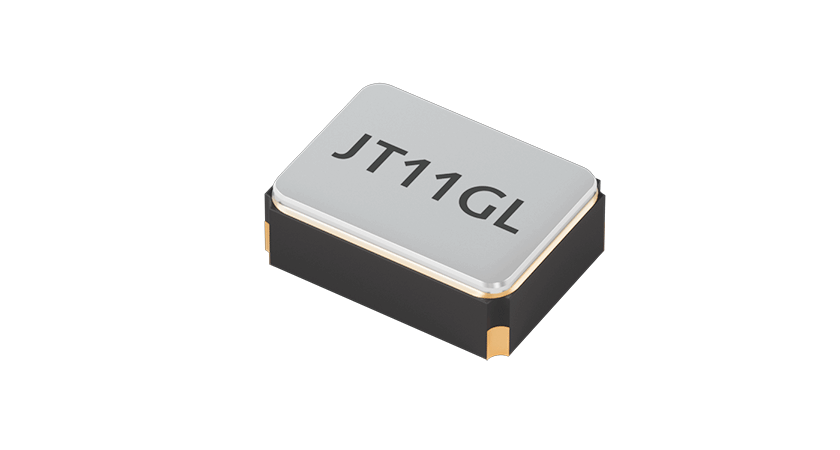
The Jauch JTP/JTS series is designed specifically for GPS/GNSS, delivering extremely low hysteresis and minimal frequency drift for exceptional timing stability.
With a temperature gradient of max. 0.1 ppm/°C and overall stability down to ±0.05 ppm from –40 °C to +105 °C, they maintain precise GNSS timing even under rapid temperature swings.
The JT11GLE and JT21GLE variants are especially energy‑efficient, consuming only 0.1 µA in standby mode.
5) OCXO (Oven‑Controlled Oscillators)
Designed for infrastructure‑level timing:
- Stability: ±0.5–100 ppb
- maximum short‑term stability and outstanding holdover performance
Used in base stations, time servers, and 4G/5G cells.
*Featured image was generated using artificial intelligence.