
 Deutsch
From Quartz Crystals and Oscillators to a Complete Timing Solution
For many years, Jauch has supported developers with Quartz Crystals, Oscillators, and Temperature-Compensated and Voltage-Controlled frequency solutions for electronic system clock generation. With the introduction of Real-Time Clock (RTC) Modules, Jauch is expanding this portfolio with another key technology for modern embedded applications.
While Quartz Crystals and Oscillators provide a stable frequency, RTCs are responsible for managing time and date functions reliably. This makes them a central component in systems that require event time-stamping, power-saving features, or a dependable time reference even when the main power supply is switched off.
What Is an RTC and Why Is It Needed?
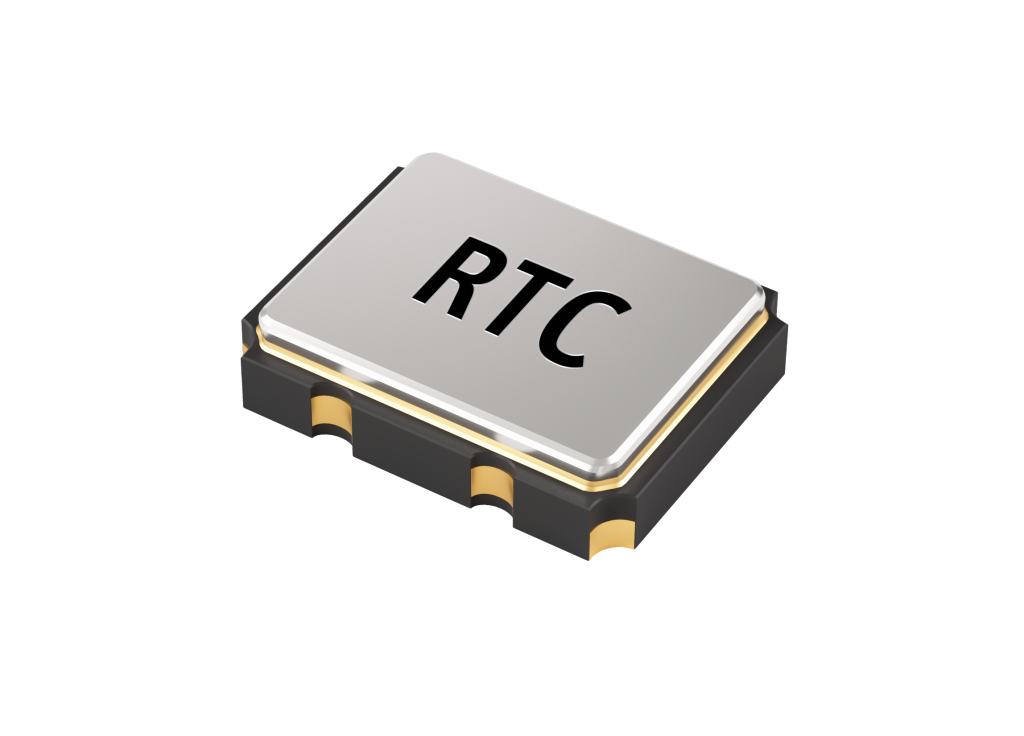
A Real-Time Clock (RTC) is an independent timing device that operates independently from the microcontroller. Even when the system is in sleep mode or the primary power supply is unavailable, the time base continues to run. In modern electronic systems, an RTC performs far more functions than simply displaying the time and date. Typical functions include:
Alarm and timer functions
- Calendar alarm
- Wake-up timer for low-power operating modes
- Periodic interrupt
Time-stamping and event logging
- Timestamp function
- Event inputs
Power management functions
- Automatic power switching
- Backup Battery charging control
- Low backup current
Accuracy-enhancing features
- Temperature compensation with DTCXO
- Clock or frequency output
- Diagnostic and monitoring functions
- Reset output
These functions are particularly important in Smart Meters, IoT devices, Data Loggers, industrial equipment, and medical devices. In these applications, systems often need to operate for extended periods with minimal power consumption while still providing reliable timekeeping information.
Typical Applications
- Smart Meters
- IoT Sensors and Gateways
- Data Loggers
- Industrial Automation
- Security and Surveillance Systems
- Medical Technology
- Access Control Systems
Internal or External RTC?
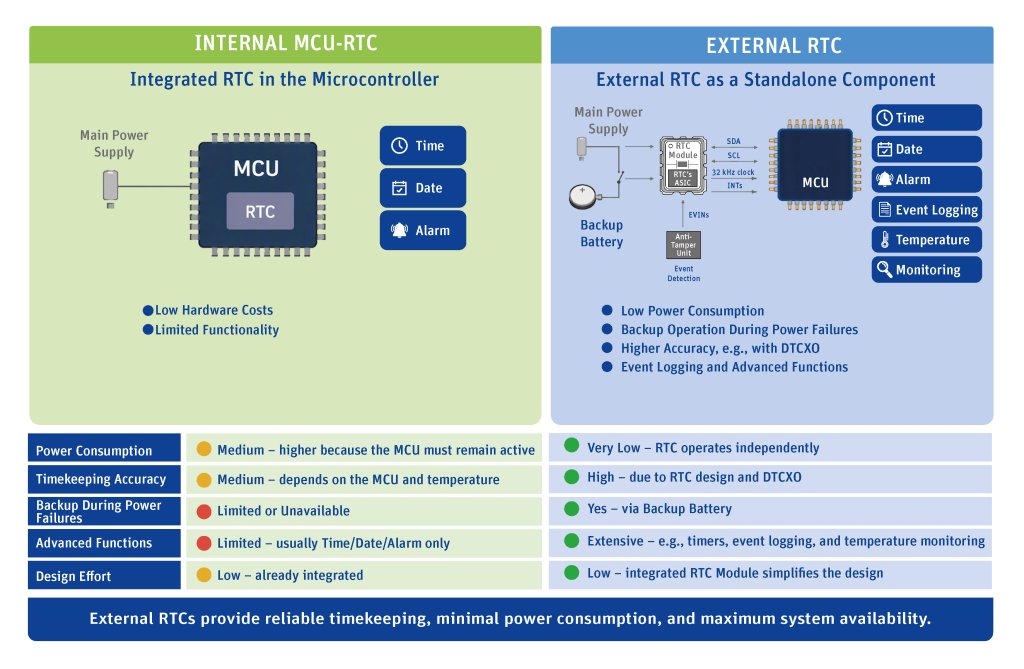
Many microcontrollers already include an integrated RTC function. For simple applications, this is often sufficient. However, when low power consumption, high accuracy, or long-term operation are critical requirements, internal solutions often reach their limits.
An external RTC offers several advantages:
- Independent operation from the host processor
- Very low power consumption in backup mode
- Reliable timekeeping during sleep mode
- Advanced alarm and wake-up functions
- Event logging and time-stamping
- Higher accuracy through temperature compensation
Internal RTCs share the power supply, temperature conditions, and system resources of the microcontroller. In contrast, external RTCs operate as independent low-power components and maintain accurate timekeeping during extended sleep periods or when the primary power supply is disconnected.
Battery-powered sensors, Data Loggers, and Smart Meter systems in particular benefit from this approach, as the microcontroller only needs to be activated when required. In the meantime, the RTC handles timekeeping, logs events, and can selectively wake the host processor via an alarm or wake-up timer.
Why RTC Modules Instead of an RTC IC and Quartz Crystal?
Conventional RTC solutions often consist of an RTC IC and an external 32.768 kHz Quartz Crystal. In these designs, PCB layout, load capacitance, and external influences can affect timekeeping performance.
Jauch RTC Modules integrate the Quartz Crystal and RTC circuitry into a single compact package. This reduces development effort, minimizes the bill of materials, and makes designs easier to replicate. At the same time, it helps reduce the risk of layout and tuning errors.
All Modules feature an I²C interface, enabling straightforward integration into existing embedded platforms.
The New Jauch RTC Family at a Glance
To meet different application requirements, Jauch offers five RTC Modules within a unified platform.
JR8111: Ultra-Low Power for Extended Battery Life
The JR8111 is designed for minimum power consumption and achieves a typical backup current of just 100 nA. It also provides event detection and time-stamping functions. This makes the Module particularly well suited for battery-powered IoT devices, sensors, and Smart Meters.
JR8130: RTC and Power Management in a Single Module
The JR8130 combines RTC functionality with automatic backup switching, reset logic, and charging and protection functions for backup energy storage devices. It is particularly well suited for systems where timekeeping and power management are closely linked.
JR8900: High Accuracy Through DTCXO Technology
The JR8900 features digital temperature compensation (DTCXO), providing high timekeeping accuracy across a wide temperature range. It also includes a readable temperature sensor. Typical applications include industrial electronics, measurement systems, Data Loggers, and Smart Meters.
JR8901: Event Logging and High Accuracy
The JR8901 combines DTCXO technology with very low power consumption and extensive event-logging capabilities. Up to 32 time stamps can be stored, and multiple event inputs can be monitored. This makes the Module particularly well suited for monitoring, security, and IoT applications.
JR8804: Designed for Demanding Industrial Applications
The JR8804 combines temperature compensation, event detection, and status monitoring. Thanks to its extended operating temperature range and additional diagnostic functions, the Module is ideal for demanding industrial and outdoor applications.
Conclusion
Modern RTCs are much more than electronic clocks. They perform power management functions, control wake-up processes, log events, and provide a reliable time reference even when the primary power supply is unavailable.
With the JR8111, JR8130, JR8900, JR8901, and JR8804 Modules, Jauch expands its existing portfolio of Quartz Crystals and Oscillators with integrated timing solutions for energy-efficient, long-lasting, and reliable embedded systems. As a result, developers gain access to a scalable RTC platform that addresses a wide variety of requirements in industrial, IoT, and medical applications.
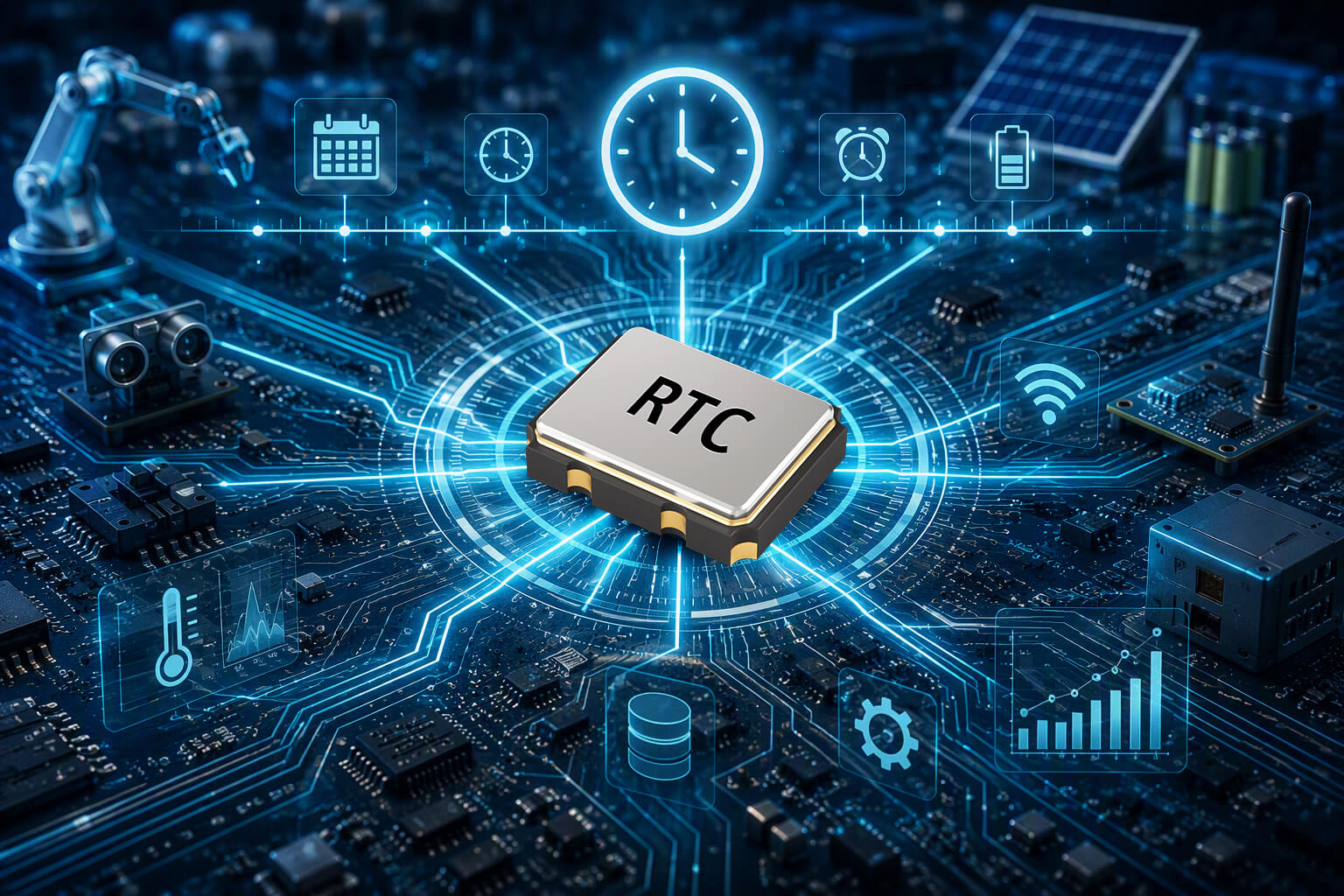
*The featured image was created using artificial intelligence.