
 Deutsch
At the beginning of the year, the new Solid-State Battery from Donut Lab attracted worldwide attention at CES in Las Vegas. The company promised an energy density of 400 Wh/kg, ultra‑fast charging, and 100,000 cycles — performance figures that exceed today’s Lithium-Ion battery standards by a wide margin, prompting the industry to ask: Is this a technological breakthrough or an overhyped marketing claim?
The combination of high energy density, low raw material requirements, and a wide operating temperature range, down to –30 °C, certainly sounds impressive. Until now, however, these claims were based almost entirely on manufacturer information — independent testing had been missing. For the first time, external measurement data is now available:.
Experts at VTT show that the cell delivers higher capacity at 80 °C and 100 °C compared to room temperature, but also loses its pouch vacuum after discharge at 100 °C — an indication of mechanical changes that is critical for evaluating real‑world applicability.
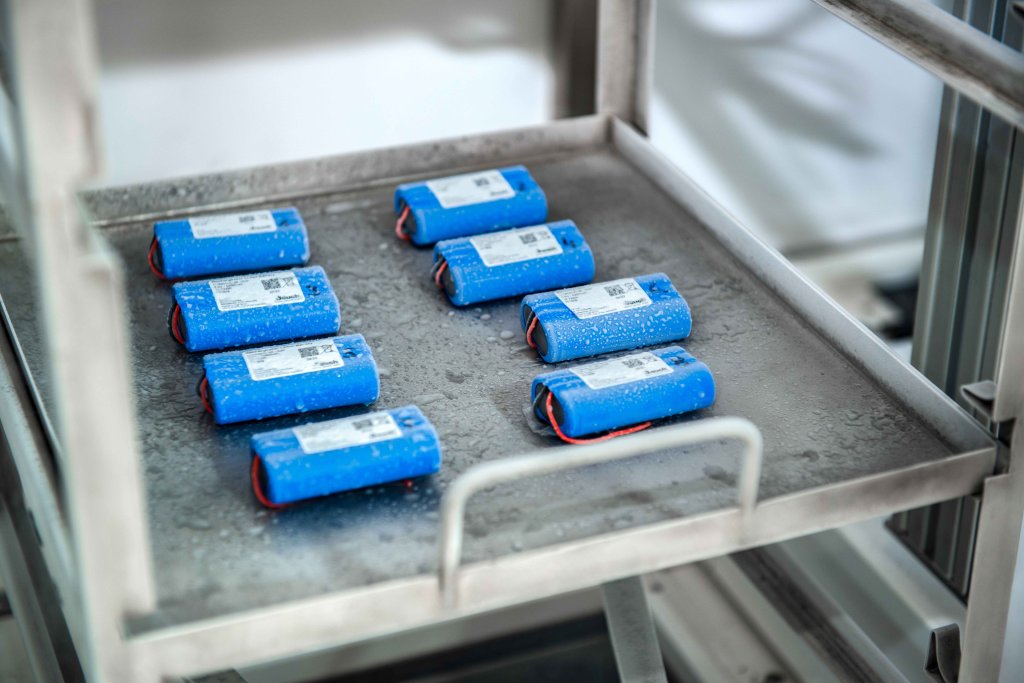
As battery specialists, this is precisely where we want to take a closer look and place the Battery into technical context. That’s why we asked our colleague Sönke Zacher, Battery Expert at Jauch, for his assessment:
1. Practical Relevance of High-Temperature Test
“The measurements indicate an unusually strong performance under heat, suggesting low internal resistance and good ion conductivity. However, the decisive question is whether these characteristics remain stable over multiple cycles, during temperature fluctuations, and under mechanical stress — especially considering the documented pouch vacuum loss after the 100 °C discharge.”
2. Comparison with Lithium-Ion Batteries
“Stable performance at 80–100 °C would be exceptional for today’s Lithium-Ion batteries, as they typically degrade significantly or become safety‑critical within this temperature range. Claims regarding the energy density, safety, and cycle stability of the new solid‑state cell, however, remain unverified — at present, they appear more ambitious than independently substantiated.”
3. Our Test Plan at the Jauch Test and Certification Center
“To reliably assess real‑world applicability, we would conduct the following evaluations, among others:
- Long‑term cycling and temperature cycling
- Mechanical stress testing, including vibration, pressure, and drop tests
- UN 38.3 and IEC 62133 certification test sequences
- Abuse tests such as overcharging, crush, short circuit, or nail penetration
- Analysis of gas generation, internal resistance, and capacity stability under heat
Only a combination of these tests can provide a complete picture of the cell’s robustness under realistic operating conditions.
Conclusion: Promising – but far from confirmed
The initial data on the new solid‑state Battery is undoubtedly intriguing. However, it does not replace a comprehensive validation — especially since the tests were conducted with individual cells rather than a full battery pack.
Nevertheless, more than 20 companies worldwide are already far advanced in developing solid‑state Batteries, and the fundamental advantages of this technology are undeniable.
While we continue to monitor developments closely, we remain focused on what matters today: our established, reliably tested Lithium Batteries, which deliver stable performance in numerous industrial applications every day. Only once new technologies can meet this standard under real operating conditions will the true comparison begin.”